![]() |
||
| Home | Message Board | Classified Ads | Links | Articles | Back Issues | Membership | Privacy Policy | |
| IRELAND For many, Ireland has an almost magical lure. Few places outside of the tropics are as green. It has rolling hills and meadows with fuchsias growing at the side of the road. It has many miles of unspoiled, rugged coastline. Dwellings range from ancient castles and Georgian mansions to quaint cottages and humble farmhouses. An island 300 miles long and 170 miles wide or slightly larger than West Virginia, it has a total population of just over 5.9 million. Some 4.2 million live in the Republic of Ireland, and another 1.7 million in Northern Ireland, which is part of the United Kingdom. The Republic of Ireland has been known as The Irish Free State since 1922 and was finally confirmed as a true republic, gaining full independence from the U.K., in 1949. Ireland is a nation of storytellers. Although Gallic is disappearing as a spoken language, its charming rhythms and convoluted, coiled back sentences enrich the English of the many writers and storytellers here. Christianity took hold early in Ireland, though a rich pagan culture already existed. Ancient customs melded with newer ones and never totally disappeared. Halloween, for example, comes from the feast of Sambain, when the door to the Celtic underworld supposedly cracked open. The ancient belief in "little people" persisted, and even those who are skeptical enjoy telling the traditional tales. Irish history encompasses great literary and social achievement as well as dire hardship and suffering. As recently as the 1960s, most of its people lived in rural areas, but many changes have occurred in the decades since then. For a time, Ireland was among the most prosperous countries in Europe. With a corporate tax rate lower than that of other EU countries, Ireland drew international investment beginning in the mid-1990s, resulting in double digit growth. As many as 500 U.S. companies opened branches in Ireland. The Celtic Tiger years aren't the only explanation for Ireland's prosperity. Demographics shifted dramatically after birth control became legal in 1979. Smaller families became the norm, women rejoined the workforce and a greater percentage of people became employed. Even so, poverty still exists here, and the disparity between the highest and the lowest paid workers has actually increased. The global recession has had a severe impact here. GDP figures dropped and unemployment reached a high of 12%. The real estate bubble burst, and building and construction slowed. However, Ireland has shown itself to be a prosperous country with an economic model that works as opposed to the corruption and mismanagement found elsewhere. Austerity measures have been put into place and although political turbulence may lie ahead, Ireland has every reason to anticipate a recovery. THE EXPAT LIFE
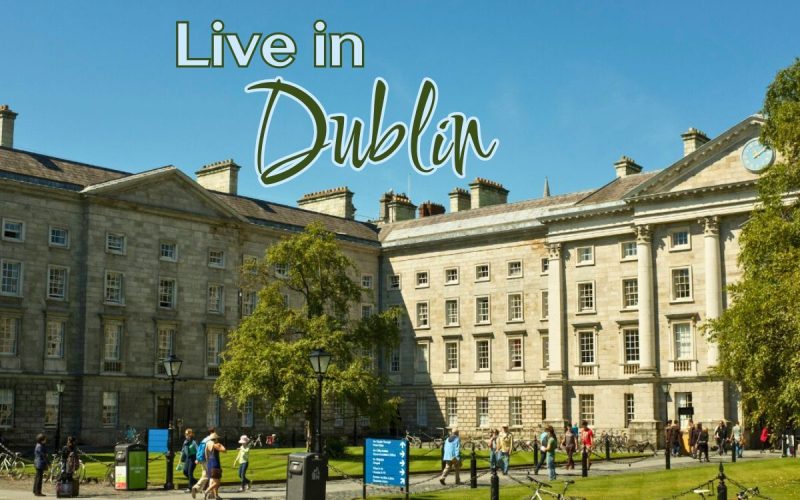
One American-Irish couple, Karin and Michael Shepherd, decided to live their fantasy and bought a small grocery store in West Cork. They write, "Upon moving into our living quarters above our shop in a 200-year-old stone building in a picturesque village we discovered the glow of the fireplace off the wood paneling as seen from the street was a false front. We couldn't get the #&@%# stove to stay lit in the coldest January the locals could remember. The shop assistant who was going to help us learn the trade didnt show up our first morning. The Lotto organization decided our taking over was a good time to cancel the outlet". They loved the lifestyle and the friendliness that the Irish people are famous for. Conversation is often said to be an art form here. They found that going out for a quick errand might mean returning 45 minutes later with all the local gossip. "On a busy day driving up the street was like being in a parade with all the waving. We loved the people, we loved the music, we loved the casualness of it all", they write. But after five years, they liquidated the business, sold the property at a profit and moved to Paros, Greece. More than a few of the expats who moved to Ireland a decade or more ago have cashed in and moved on. Although Ireland is no longer a country where North American expats can find a simple cottage for under $50,000 and reduced living costs, it is still one of the most loved places among both working expats and those of independent means. Instead of coming for the low prices, they come for the friendliness of the people, the culture, and the natural beauty as well as for the business climate. For information on making the move, including rules for bringing in pets, see www.movetoireland.com. Ireland's maritime climate is milder than most of Europe. Temperatures range from 16 to 75 degrees Fahrenheit, with mean temperatures of 40 in winter and 60 in summer. The average relative humidity is 78%, and it rains often. When it's not raining or misting, gray clouds may hover ominously, then suddenly give way to sunshine. Annual rainfall averages from 31" to 47" in low-lying areas and in excess of 79" in mountainous regions. Being far north, however, makes for summer days lasting later than 10 PM and winter days when sun rises at 9 AM and darkness falls at early as 3 PM. It's no surprise that some newcomers find the shorter days far harder to adjust to than climate factors. DUBLIN Housing values here have dropped but are still higher than those in the country or in small villages. SOUTHEAST Waterford City, best known for its high-quality crystal, is the oldest city in Ireland and still retains some of its medieval ambiance. Although many homes are quite old, newer housing is also available.
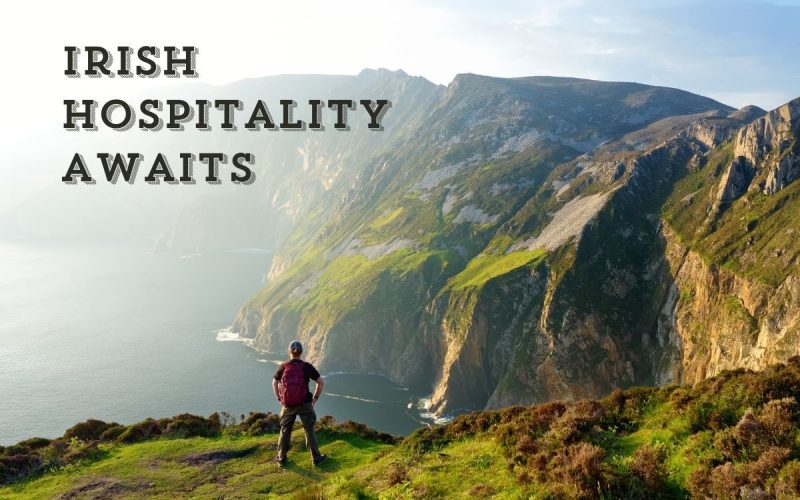
Wexford, a seaside town dating back to the Vikings, though little remains of their presence. Situated about halfway between Dublin and Cork, the town hosts an opera season as well as a summer festival combining horse racing and bluegrass. Inland from Waterford is Kilkenny, an inland country, where the town of Kilkenny is a well- preserved medieval city. The area has Georgian country estates and manor houses. SOUTH Inland from Cork is Country Tipperary with attractive farms and pastureland as well as the possibility of more affordable homes. The landscape becomes increasing bleak the closer one gets to the Burren, an area with vast outcroppings of stone and no trees, only wildflowers. County Kerry is one of the last true Gaeltacht or areas where Irish is spoken. The Ring of Kerry, a 112-mile drive around the Iveragh Peninsula, brings many visitors here. On the Dingle Peninsula, old fishing villages have survived as have brightly colored houses. Both mountain and seaside views are spectacular. WEST Galway is the second largest county in Ireland, encompassing fishing villages and farmland as well as the rugged, strikingly beautiful coastal area, Connemara. Just offshore are the Aran Islands. Galway, a coastal city with a population of about 65,000, is a favorite of artists, writers and anyone who enjoys living in a historic and artistic atmosphere with a university nearby. The heart of the city has remained unchanged since the middle ages, when it was an important center for trade with continental Europe. In recent years, high-tech and pharmaceutical companies have opened facilities here, and an increasing number of Europeans and North Americans make Galway their home. Housing costs in the city are nearly as high as those in Dublin, but lower cost properties can be found inland. Galway has its own airport and is about 90 minutes from Shannon International Airport. INLAND COUNTIES NORTHWEST County Clare is known for the dramatic Cliffs of Moher, rising 750 feet from the sea, but it's also a center for traditional Irish music. The capital is Ennis, a tiny medieval city that is also the commercial center. Coastal properties are less costly here than in neighboring Galway and prices are still lower as one travels inland. County Sligo offers traditional music, fishing, prehistoric remains and a beautiful landscape. Sligo town with a population of about 30,000 is the largest town in the northwest of Ireland. The area has over 60 ancient megalithic tombs, some dating back to 4000 BC. County Mayo is a maritime county with numerous lakes and a coastline replete with small islands. The largest island, Archill, connected to the mainland by a bridge, offers dramatic scenery with cliffs and moorlands. The town of Westport attracts many visitors and living costs are relatively high. Elsewhere, though, prices are moderate, even in some very attractive coastal villages. County Leitrim has only two and a half miles of coastline and is divided into two parts by Lough Allen. To the south are small hills, lakes and farmland, while to the north is a mountainous landscape. Largely unspoiled and sparsely populated, it is an area of striking beauty and low housing costs. Bordering Northern Ireland, County Donegal was once part of Ulster province but was split off when the Republic was formed. It has been called a microcosm of all Ireland. In the west it is a landscape of mountains, moors and bogs. Relics of the Celtic past include beehive huts of early Christian monastics as well as the standing stones of the Druids. In the east are farmlands settled by the Scottish and English. In the north are maritime cliffs, miles of rugged coastline and Rossnowlagh beach, stretching for miles along water too cold for swimming. For more information, see Network for Living Abroad newsletter, September, 1997 and March, 2002. See back issues. Resources for Ireland
DVDs |
||||
| Home | Message Board | Classified Ads | Links | Articles | Back Issues | Membership | Privacy Policy | |
||||
|
|
||||