| Home | Message Board | Classified Ads | Links | Articles | Back Issues | Membership | Privacy Policy |

THE FRENCH MYSTIQUE


Cracking the Codes
The Art of Eating
Living in France

About 90,000 Americans live in France, according to U.S. State Department figures, and many more dream of doing so. They don't come for the beaches, the climate (not usually, anyway) or low living costs. They're drawn to the culture: the French way of thinking, of doing things and making life pleasurable, moment by moment.

Warm baguettes, fields of lavender, places where dogs are no less welcome than people, conversations where wit reigns...these are some of the things that comprise the French lifestyle. Living in France can mean discovering what matters to you and taking the time to enjoy it.

However, the transition isn't necessarily be smooth. If you're not moving to France of your own initiative or haven't studied the language and the culture in anticipation of being there, you're in for a bewildering experience.

In fact, the adjustment can be rough even if you're realizing a lifelong dream. One returned Peace Corps volunteer said, "I thought France would be a piece of cake after Zaire, snakes in my bed and wood fire, but it was worse."

The differences are subtle and often paradoxical, but harshly real, yet for some of us, endlessly fascinating. It's important to realize that no matter how much of a Francophile you are, you will never be French. You can become part of an expat community, but you can never truly be a part of a French community. In time you will have friends, but even with a French spouse, you will always be an outsider. Still, the better you fit in, the closer you adhere to the rules, the easier your life will become.

Cracking The Codes
The French have an elaborate system of rules for everything. Some date back to long dead French kings, and others, like the rules for grammar, are being revised even today. They have been writing etiquette books since the 12th century.

As Polly Platt writes in French or Foe, "Communication between strangers in France has been honed over the centuries to a system of ratified codes. Foreigners are to be shunned, and as they give themselves away instantly by their ignorance of the codes, nothing is easier. Foreigners who know the codes, however, immediately shed most of their alarming foreignness."

In practice, however, proper behavior may be clipped, automatic responses, lacking the spontaneous warmth of the Italians or the Portuguese. For the French, what matters is knowing the right words, the nuances and the gestures, and it takes a while to learn them.

When in doubt, Americans tend to smile and agree with others. We strive for harmony. The French, on the other hand, thrive on conflict, shades of difference and expressions of individuality, all of which keep life from being boring. Disagreement fuels conversations here. "French conversation has elements of dance and drama; it is a form of entertainment," writes Sally Adamson Taylor in Culture Shock, France. Each person makes brief, witty comments, never lecturing, always listening and acknowledging the comments of others.

Americans and many Asians communicate by smiling; the French do not. This is so important that Platt lists "Don't Smile" as Code No. 1. Smiling at strangers, even making eye contact, is a violation of their sense of privacy.

French people close the door behind them upon entering a room, whether or not they want to be left alone. This may be particularly disconcerting to foreigners in business who see a closed door as a real barrier. If you knock, you'll probably be admitted, and that's what they want to do: knock.

Those fortunate enough to be invited into a French home should not venture beyond the living or dining areas without asking permission. You may know where the bathroom is, but ask first. Don't venture into the kitchen to lend a hand, and don't poke into other living areas. It's highly unlikely that you would be treated to a tour of the house as you would in the U.S.

A French friend is a friend for life. A friend is someone who'll answer your call in the middle of the night, lend you money or spend hours listening to your problems. The French see our more casual relationships as shallow and not worthwhile, and because of this may keep their distance.

At all levels, relationships count. It's the way business and government work: it's how people find jobs. Matters that would be settled efficiently over the phone in the U.S. require face-to-face meetings in France, perhaps over a leisurely meal at a restaurant. A business or professional relationship is not the same as a friendship, however. While Americans might invite colleagues into our homes, French people rarely do.

The Art of Eating
Food has both old and new rules and rituals, often complex, yet food is a good starting point for a newcomer to learn about French culture. The French agree that food is sacred and that eating must be undertaken with great respect and ceremony.

Sanche de Gramont wrote in The French, Portrait of a People, "There is in the French genius for gastronomy something of the Cartesian dream to order the universe, to refine the physical until it is trembling on the brink of the ideal. This is the essential artistic act, to magically transform raw material. There is the same mysterious gap between the musical scale and a Debussy prelude as between an egg and a souffle. "

The sequence of courses, the choice of wines, the preparation of the sauces, all rest on tradition. EuroDisney at first failed to recognize that scheduling rides at lunch time was heresy.

All social classes are caught up in the worship of food. French farmers have respect and political clout chiefly because of their role in producing quality ingredients. The guidebooks ranking restaurants are awaited with great anticipation, much like Academy Awards or the World Series, and the best chefs are national heroes.

Living in France
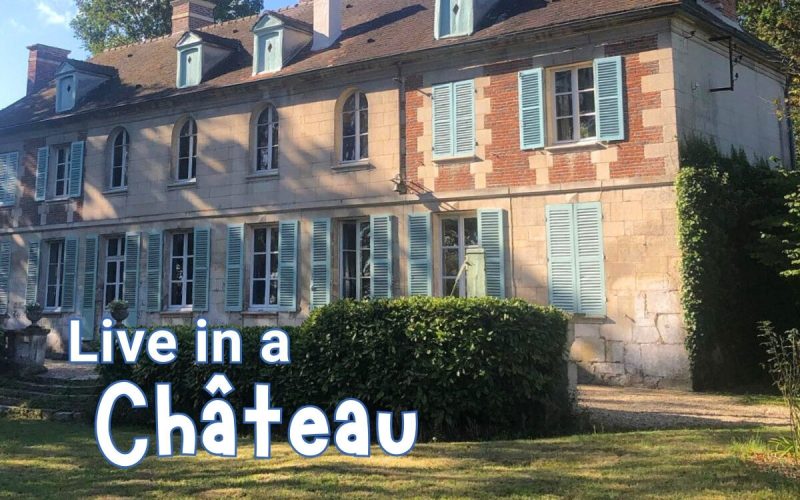
Not everyone who loves Paris can afford to live there. A couple would need an income of about $40,000 a year. However, it is possible to live in a small town or rural area for far less.

Farmhouses and apartments in need of renovation can sell for well under $100,000. (Be sure to have the advice of a notaire when buying property, and be aware of the inheritance laws that favor children and other family members over spouses). Electricity is very costly, so is gasoline and no one would dare skimp on food.

For more information, see Network for Living Abroad back issues. We have one on France each July.

Resources for France

Also see these works of fiction


| Home | Message Board | Classified Ads | Links | Articles | Back Issues | Membership | Privacy Policy |

Copyright © 1999-2006 Network for Living Abroad
Santa Fe, NM USA 505-438-7772
e-mail: editor@liveabroad.com
Designed and Powered by MIS Inc.